Italy is the country where backpacking budgets break. Not because any single thing is outrageous, but because the small daily costs — coffee sitting down, cover charges, high-speed train supplements, city taxes — accumulate quietly. Three habits fix most of it.
Habit one: take the regional train
Italy has two rail networks running in parallel and the price gap is enormous.
| Leg | Regional | High speed |
|---|---|---|
| Florence → Bologna | ~€10, 1h30 | €25–45, 37 min |
| Rome → Naples | ~€13, 2h10 | €25–50, 1h10 |
| Venice → Verona | ~€10, 2h15 | €22–40, 1h10 |
| Rome → Florence | ~€22, 3h30 | €30–60, 1h30 |
Regional trains need no reservation, can be bought on the day and are perfectly comfortable. On legs under two hours the time saving is not worth triple the fare. On Rome to Milan, book the Frecciarossa weeks ahead instead — advance fares drop to €30 or so.
Validate regional tickets in the green machines on the platform before boarding. An unvalidated paper ticket is treated as no ticket and the fine is around €50. E-tickets on the app do not need this.
Habit two: stand at the bar
Italian cafés legally charge more for table service, and the difference is posted. An espresso is €1.10–1.50 standing at the counter and can be €4–6 at a table in a piazza. Two coffees a day for two weeks is the difference between arriving and not.
Not a scam — a system, and one Italians use daily. Order at the till, take the receipt to the bar, drink standing, leave.
Related: coperto, the €2–4 per-person cover charge, is normal and legal. What is not normal is a restaurant with photographs on the menu and someone outside inviting you in, within 300 metres of a major sight.
Habit three: eat where the price is on the wall
Italy's cheap food is genuinely excellent and it is not in restaurants.
Pizza al taglio, sold by weight from a tray — €2.50–4 for a substantial lunch. Alimentari and delis will make a sandwich from what is in the counter for €4–6. Rosticcerie sell roast chicken and sides by weight. In Naples, a pizza fritta or a margherita from a proper pizzeria is €5–8 and is the best pizza on earth.
Aperitivo is the budget traveller's best meal in the north: in Milan, Turin and Bologna, a €8–12 drink between 6 and 9pm comes with a buffet that functions as dinner.
Sleeping
| City | Dorm bed |
|---|---|
| Venice | €35–55 |
| Florence | €30–45 |
| Rome | €25–40 |
| Bologna | €22–35 |
| Naples | €18–30 |
| Palermo | €15–28 |
The south is 30–40 percent cheaper for everything, and Naples, Bari, Lecce and Palermo are the most interesting cities in Italy that are not overrun. Weighting a trip southward is the single biggest structural saving available.
City tax is charged separately at check-in, €2–5 per person per night, cash, and is not in the booking price. Budget for it.
In Venice, stay in Mestre on the mainland — ten minutes by train, roughly half the price, and the last train back runs late.
What costs nothing
An unusual amount. Every church is free and Italy's churches hold Caravaggios, Berninis and Michelangelos — San Luigi dei Francesi in Rome, Santa Maria del Popolo, the Pantheon's interior. Most historic city centres are open-air museums you simply walk through. Beaches outside the private stabilimenti are public and free.
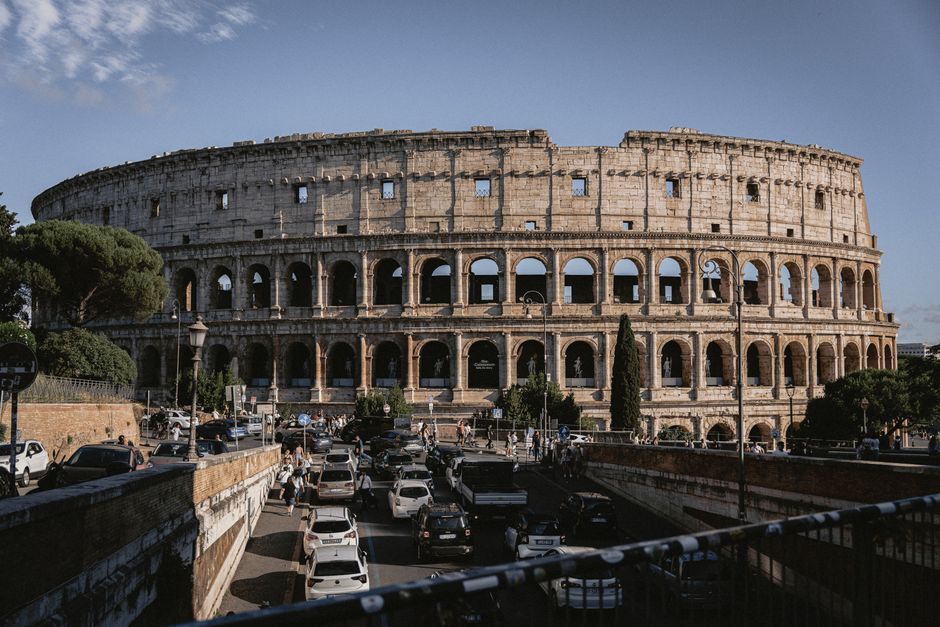
The paid sites — Colosseum, Uffizi, Accademia, Vatican Museums — are €15–25 each. On a budget, one a day is the ceiling, and several offer free entry on the first Sunday of the month, which trades money for a long queue.
Timing
April to early June and September to October: warm, everything open, prices well below peak. July and August are hot, crowded and expensive, and in mid-August much of the country closes for Ferragosto as Italians take their own holidays.