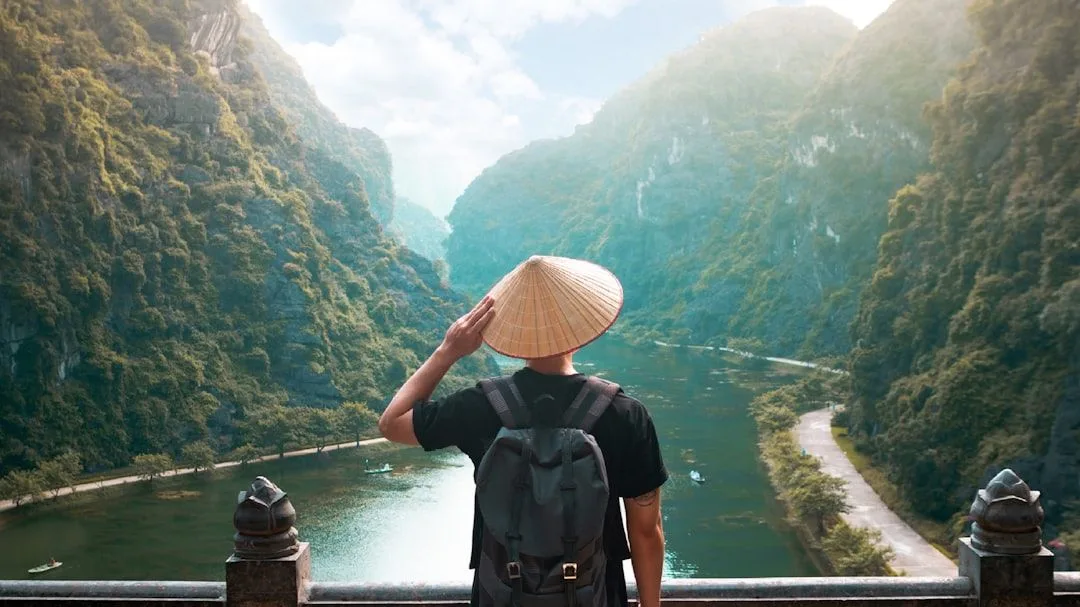
Cambodia is compact, inexpensive and straightforward to travel, and most backpackers move through it in ten days between Thailand and Vietnam. It is also the country on that circuit that most clearly asks something of its visitors, because its recent history is present rather than historical.
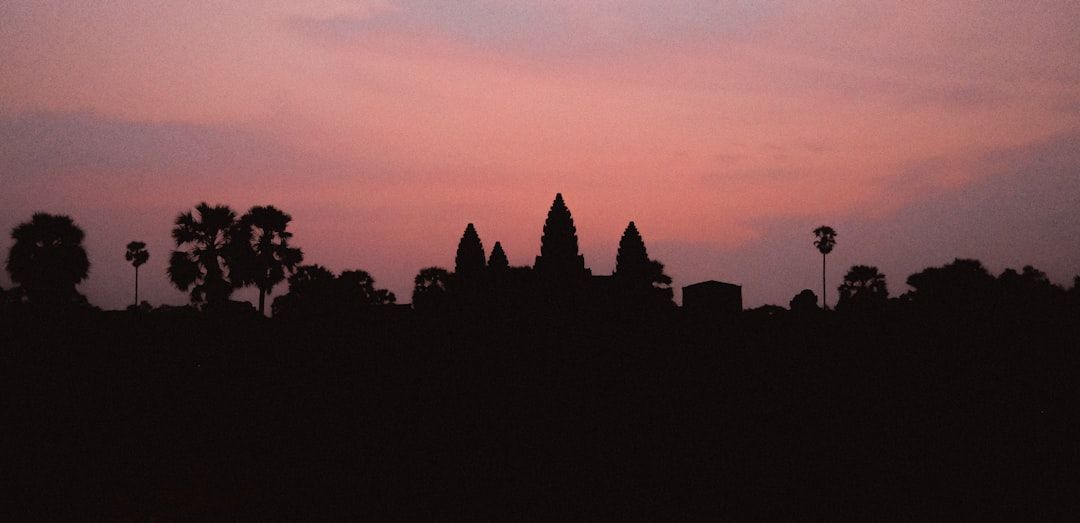
Angkor
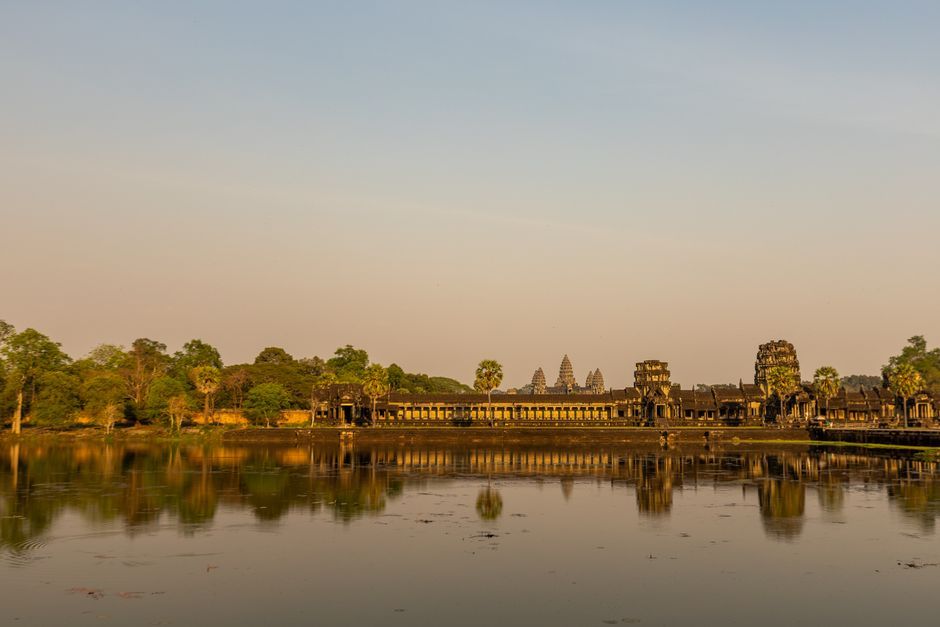
The reason most people come, and it exceeds expectation — not because of Angkor Wat itself, which everyone has seen photographed, but because of the scale of the whole complex. It is an entire city, hundreds of square kilometres, with temples in forest that you can have almost to yourself an hour after sunrise.
Buy a three-day pass rather than a one-day. It is valid across a longer window, so you can use it on non-consecutive days, and that is exactly the right way to see the place: out at dawn, back to Siem Reap through the punishing middle of the day, and out again in late afternoon.
Hire a tuk-tuk driver for each day. It costs little, the distances are too great to walk, and a good driver will route you against the tour-bus flow.
Dress code is enforced at the temples: shoulders and knees covered. Bring more water than you expect, because the heat inside the stone is relentless.

Phnom Penh and the memorial sites
The capital is chaotic and improving fast, with a good riverfront and the Royal Palace, but the reason to stop is Tuol Sleng and Choeung Ek.
These document the Khmer Rouge period — the former a school converted into a prison, the latter a killing field. They are presented plainly and they are extremely hard to spend time in. The audio guide at Choeung Ek is excellent and worth taking.
Go respectfully. Dress as you would at a memorial, keep your voice down, and do not photograph yourself there. Plan nothing demanding afterwards; most people find the rest of that day gone.
Understanding this history changes how you read the country — the demographics, the missing generation, the newness of everything.
The coast and islands
The south has the beaches. Sihanoukville itself has been transformed by casino development and most backpackers now pass straight through to the islands offshore.
Koh Rong is the developed one with the nightlife; Koh Rong Sanloem is quieter, with better swimming and less of everything else. Boats run daily and the crossing is short.
Kampot and Kep, inland and along the coast, are the low-key alternative — river, pepper farms, crumbling French architecture and very little to do, which is the appeal after temples.
Route and timing
The standard loop is Siem Reap, Phnom Penh, the coast, in either direction, entering overland from Thailand at Poipet or from Vietnam near the Mekong delta. Ten days is enough; two weeks lets you slow down at the coast.
The dry season, roughly November to April, is the straightforward choice. The wet season brings a green landscape, fewer visitors and a full Tonlé Sap, and the temples in rain are genuinely atmospheric.
Money and getting around
US dollars circulate alongside the riel, and prices are frequently quoted in dollars with riel given as change for amounts under a dollar. Carry small notes and check that dollars you bring are clean and untorn, because damaged notes are refused.
Buses and minivans connect everything cheaply. The overland border crossings are straightforward but scam-prone at Poipet in particular — arrange the visa officially and be sceptical of anyone offering to help with paperwork for a fee.