
Portugal ranks in the top handful of countries worldwide for peacefulness, and travellers frequently over-prepare for the wrong things. The genuine risks here are mundane: theft on one specific tram, the Atlantic, and the pavement.
Pickpockets, and where exactly
This is the only crime most visitors will encounter, and it is concentrated in a handful of predictable places.
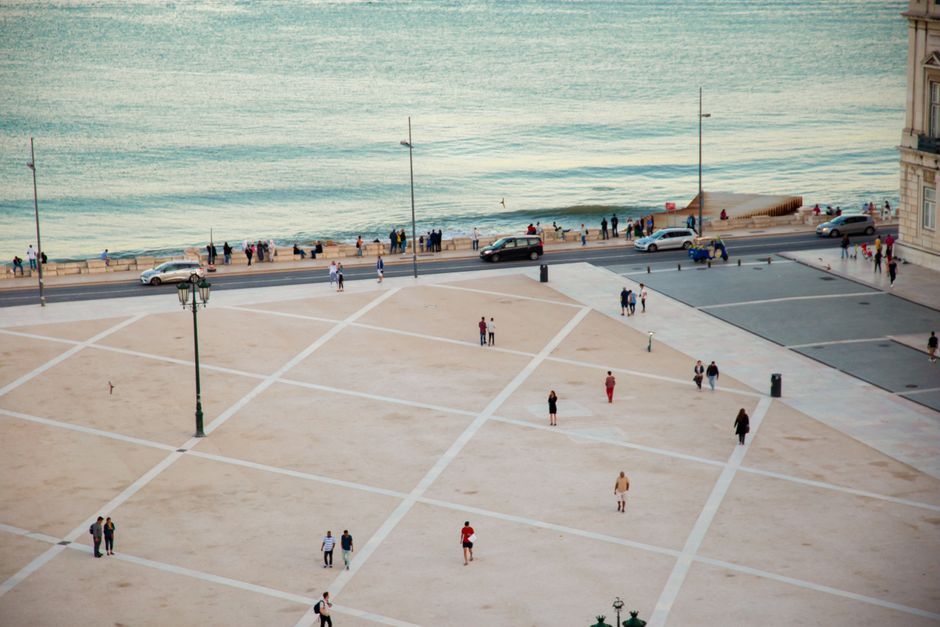
Tram 28 in Lisbon is the single most reported location in Portugal. It is a crowded vintage tram on a tourist route, and it is worked systematically. The technique is pressure at the doors while people board.
Also: the Santa Justa lift queue, crowded metro carriages especially on the blue line, the Alfama viewpoints, and Porto's São Bento station and Ribeira waterfront.
The defence is unremarkable and effective: nothing in back pockets, bag zipped and worn in front on any crowded transport, phone away rather than in hand while walking, and no wallet visible when paying. Ride tram 28 early morning when it is not packed, or take tram 12 which covers similar ground with fewer tourists.
The Atlantic is the real danger
This kills people every year and gets a fraction of the attention pickpocketing does.
Portugal's coast faces open Atlantic. The water is cold, the surf is powerful, and rip currents are common — including at popular, apparently calm beaches on the Algarve and at Costa da Caparica near Lisbon.
The rules:
Swim at lifeguarded beaches only, and understand the flags. Green: safe. Yellow: wade, do not swim. Red: stay out. Chequered black and white: no lifeguard on duty.
If caught in a rip, do not swim against it. Swim parallel to the beach until you are out of the pull, then come in.
Nazaré's famous giant waves are a spectator sport, not a swimming beach.
Cliffs
The Algarve's limestone cliffs at Benagil, Ponta da Piedade and Praia da Marinha are spectacular and actively eroding. Collapses happen, and there are fatalities. The barriers and warning signs mark genuine undercut edges, not liability caution — the ground you are standing on may be overhanging nothing.
Stay behind the fencing, and do not sit on the cliff edge for a photograph.
The pavement, genuinely
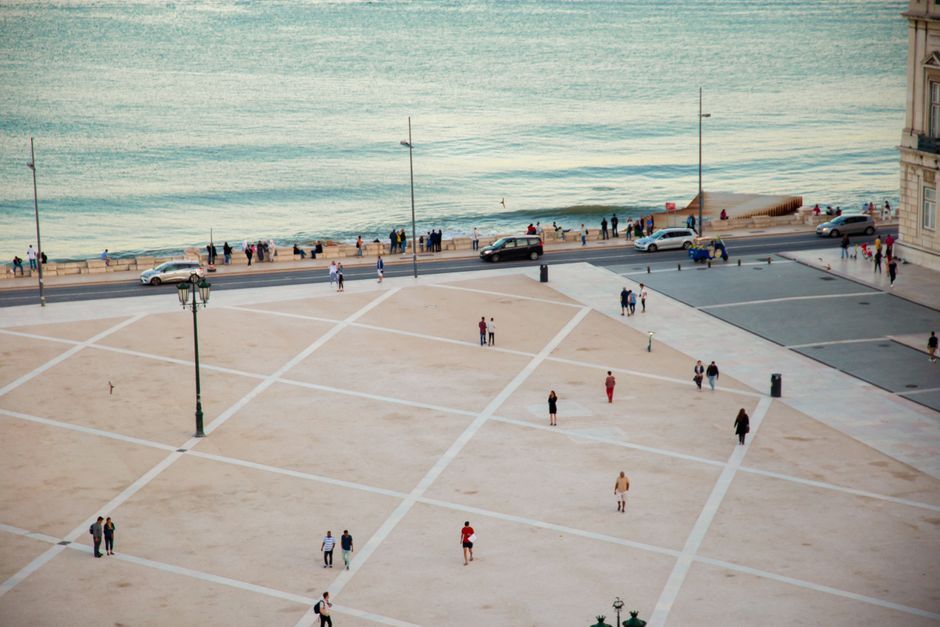
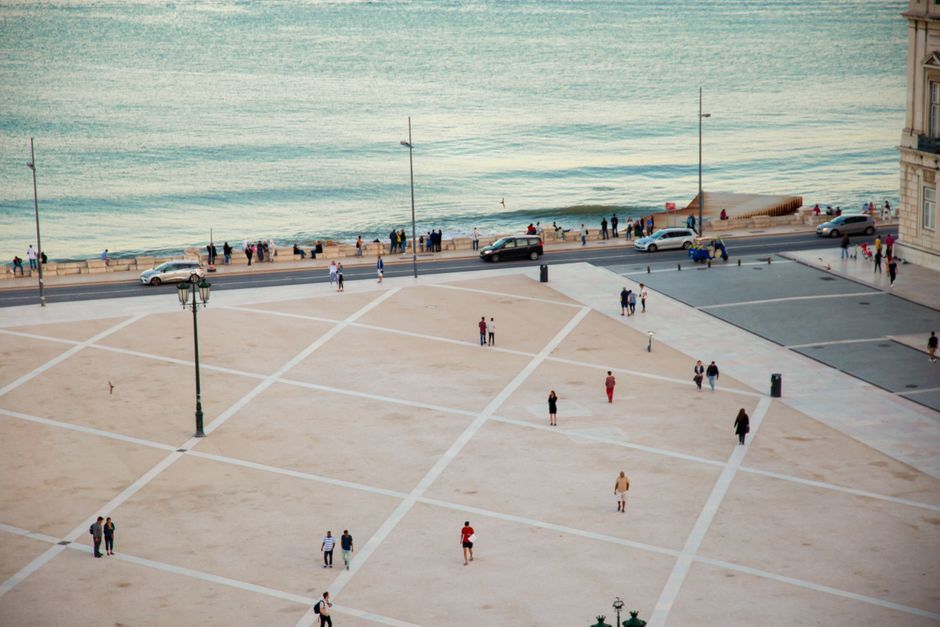
Portuguese calçada — the patterned limestone paving — is beautiful and becomes extremely slippery when wet, and Lisbon and Porto are both built on steep hills.
Shoes with grip matter more here than in most European cities. Twisted ankles and falls are among the most common travel-insurance claims in Portugal, well ahead of anything criminal.
Scams, such as they are
Drug offers in central Lisbon, particularly around Rossio and Bairro Alto — the substances offered to tourists are typically fake. Ignore and walk on; it is a nuisance rather than a threat.
Restaurant couvert. The bread, olives and cheese placed on your table are charged if eaten. This is normal practice, not a scam, and waving them away is entirely acceptable.
Taxi meters. Insist on the meter or use Bolt or Uber, both widely available and cheap.
Practical
| Item | Detail |
|---|---|
| Emergency | 112, English spoken |
| Healthcare | EHIC/GHIC for Europeans; travel insurance otherwise |
| Tap water | Safe everywhere |
| Solo travel | Straightforward, including for women |
Portugal genuinely is easy. Keep your bag zipped on tram 28, respect the beach flags, stay behind the cliff fences and wear shoes with grip. That covers essentially everything that goes wrong here.